Whiteboard to Wiki: Capturing the Brainstorm
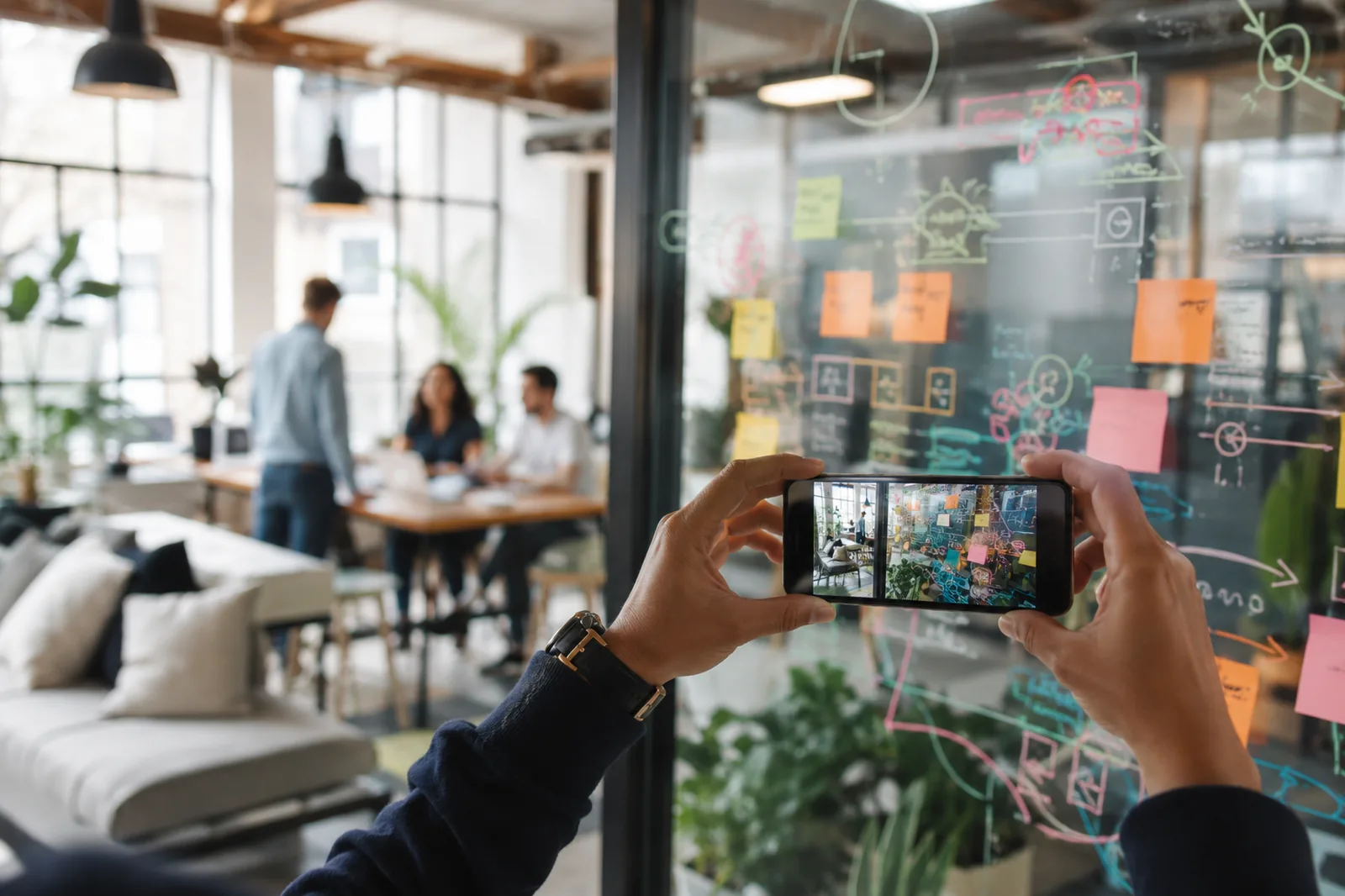
The Morning After a Good Session
Turning a photo of a whiteboard to text is the easy part: photograph the board, drop the picture into Swoosh, and the marker scrawl comes back as clean, typed words you can paste into a wiki page or a doc. Here is how to capture a brainstorm before anyone reaches for the cloth.
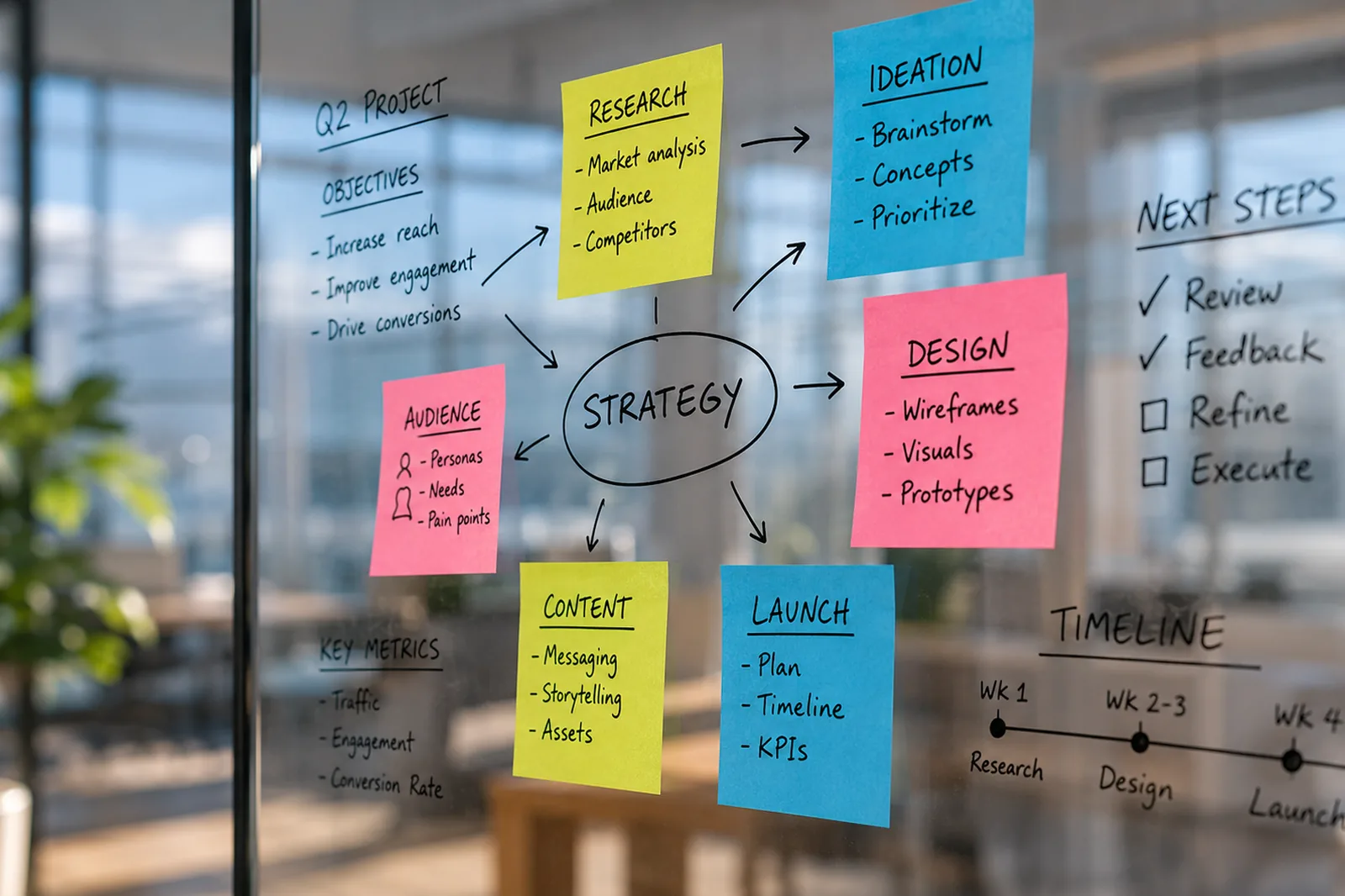
You know the ones. The session that ran an hour over and nobody minded. The marker squeaking, three people at the glass wall at once, someone drawing a box around an idea and someone else drawing an arrow to it. Sticky notes in four colours, peeled and moved and peeled again. By the end the wall is a beautiful mess, and somewhere in that mess is the best thinking your team has done all quarter.
Then everyone goes home. And the wall just sits there overnight, holding all of it.
The trouble is what comes next. The cleaners come through, or the room is booked for nine, or someone reaches for the spray and the cloth without thinking. And the whole thing is gone. Not the ideas, exactly. People remember the gist. But the shape of it, the arrows, the half-sentence in the corner that turned out to be the whole point, that goes with the marker.
Photograph the Wall, Not the Idea
So before you leave, or first thing in the morning if you got there first, take a photograph of the whole wall. One clear shot.
This is worth doing properly. Stand back far enough that the whole board is in the frame with a little room to spare. Glass walls are tricky, so move so the window glare is not sitting across the middle of your writing. Side light is your friend here, the same as it is with anything you photograph. If the wall is very wide, take it in two halves rather than one stretched panorama, and let the halves overlap by a column so nothing falls down the join.
Sticky notes are the bit people get wrong. They curl, they catch shadow, and a phone held at an angle turns a tidy grid into a fan. Stand square to the wall. Hold steady. The notes want to be read flat, the way you wrote them.
You are not trying to make it pretty. You are trying to make it legible, so that the reading does the rest.
From a Photo of a Whiteboard to Text
Here is the whole method, start to finish:
1. Stand back and photograph the whole wall in one square shot, with the glare off the glass.
2. Open the handwriting tool and add the picture; the marker scrawl comes back as typed text.
3. Pull the underlined headings to the top and gather the sticky notes beneath them.
4. Export to a Word document or Markdown and paste it where your team keeps things.
Now drop the photograph onto the handwriting tool. The marker scrawl, the looping arrows, the words on the sticky notes, all of it comes back as clean, typed text you can actually work with. The diagrams stay diagrams in your photo, but the writing inside them becomes words you can copy, search and move around.
What lands is not a finished wiki page. It is the raw material for one, which is exactly what you want at this stage. The headings someone underlined twice are there. The action that got starred is there. The tangent that everyone laughed at and then quietly agreed with is there too, instead of being lost because nobody wrote it down twice.
From there it is a five-minute job to shape it. Pull the headings to the top. Group the stickies under them. Turn the arrows into a sentence that says this leads to that. Export it to a Word document or Markdown, paste it into wherever your team keeps things, and the session has a home.
What you keep is the reasoning, not just the conclusions. The order in which the ideas arrived. The one that everybody resisted at first and then could not argue with. A board only ever shows you the end state, the final tidy boxes, but the photograph caught the workings too, and the text gives them back. Months later, when someone asks why you went this way and not that, the answer is there in your own words, written while it was still fresh.
The point is that the thinking survives the wall. The wall was always going to be wiped. The thinking did not have to go with it.
Send It Round Before Lunch
There is a quiet satisfaction in this part. The people who were in the room get a tidy version of what they built, which jogs the memory better than any photo. The people who could not make it get to read it properly instead of squinting at a blurry picture in the group chat. And the decision that felt so clear at six in the evening is still clear at nine the next morning, in words, where you can point at it.
A good session deserves to be more than a memory and a smell of marker pen. Capture it, tidy it, send it round. Then wipe the wall with a clear conscience, because the work is somewhere safe now.
A Few Questions People Ask
Will it read messy marker handwriting?
That is exactly what it is built for. Whiteboard writing is fast, slanted and often half-formed, which is where ordinary scanning tools give up. It reads the shapes and the joins rather than hunting for perfect letters, and where a word is honestly unclear it flags it so you can check your photo rather than guess.
What about the diagrams and arrows?
The writing inside boxes and beside arrows comes back as text you can use. The drawing itself stays in the photograph you took, so keep that image alongside the typed notes. Together they tell the whole story: the structure in the picture, the words in the document.
Is the session private?
To read the wall, the image is sent to a model that does the reading, and we do not keep your images or use them to train anything. Your unreleased product idea on that glass wall stays yours. It does not become part of a dataset.
Got a wall you need to keep? OCR a whiteboard, free to try.